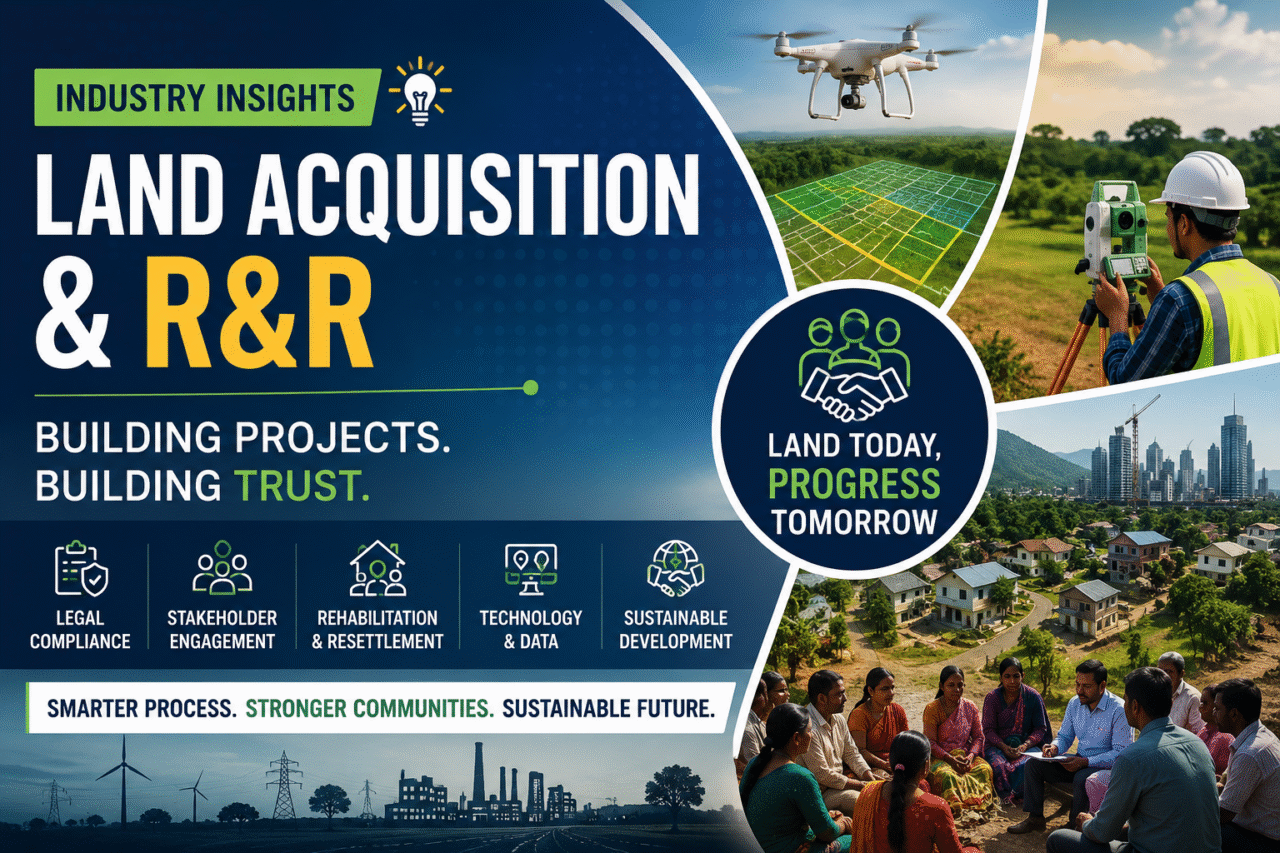
India is witnessing an unprecedented wave of infrastructure and industrial development. Mega projects in renewable energy, mining, transportation, manufacturing, urban expansion and logistics are reshaping the nation’s economic landscape. At the heart of every successful project lies one critical element land acquisition.
Yet, land acquisition today is far more than a legal or administrative process. It is a multidisciplinary exercise that requires strategic planning, technological innovation, regulatory expertise and, most importantly, the trust of stakeholders.
From Transaction to Transformation
Traditionally, land acquisition was viewed primarily as a process of securing land. Today, it has evolved into a comprehensive project management function that integrates legal due diligence, stakeholder engagement, environmental compliance, digital surveying and Rehabilitation & Resettlement (R&R).
Organizations that adopt a holistic approach experience fewer delays, reduced project risks and greater community acceptance.
Why Projects Face Delays
Many infrastructure and industrial projects encounter avoidable delays due to:
- Incomplete or outdated land records
- Ownership and title complexities
- Social and community concerns
- Forest and environmental clearances
- Multi-agency approvals
- Lack of coordination among stakeholders
- Inadequate project monitoring
Addressing these challenges requires proactive planning supported by reliable data and seamless coordination between government agencies, project developers and affected communities.
Technology is Redefining Land Acquisition
The future of land acquisition is digital. Technologies such as GIS Mapping, DGPS Surveys, Drone-based Mapping, AI-powered Analytics, Satellite Imagery, Digital Land Acquisition Management Systems (LAMS) and Real-time Project Dashboards are transforming the way projects are planned and executed.
These innovations enable organizations to:
- Improve land identification and suitability analysis
- Enhance accuracy in surveys and measurements
- Digitize land records and documentation
- Track project progress in real time
- Identify project risks before they become delays
- Strengthen transparency across every stage of execution
Technology not only improves operational efficiency but also builds confidence among clients, government agencies and local communities.
Rehabilitation & Resettlement: The Foundation of Sustainable Development
Successful projects are not defined solely by engineering excellence; they are measured by how responsibly they impact people’s lives.
Rehabilitation & Resettlement (R&R) has become a strategic pillar of project development. Beyond statutory compliance, effective R&R focuses on restoring livelihoods, improving access to education, healthcare, housing and creating opportunities for sustainable economic growth.
When communities experience tangible improvements in their quality of life, development transforms from a challenge into a shared opportunity.
Stakeholder Management: The Key to Project Success
Land acquisition involves multiple stakeholders, each with unique expectations and responsibilities. Building trust through transparent communication, timely grievance redressal, continuous community engagement and close coordination with government authorities significantly improves project outcomes.
Stakeholder management is no longer an auxiliary activity; it is a strategic advantage that determines the pace and success of project implementation.
The BNB Perspective
At BNB Land Consultancy, we believe that the future of land acquisition is driven by innovation, data, technology and people-centric execution.
By integrating Digital Surveys, GIS-based planning, AI-enabled project monitoring, Land Acquisition Management Systems (LAMS), regulatory expertise, stakeholder engagement and comprehensive R&R strategies, we help clients navigate complex land acquisition challenges with greater speed, transparency and confidence.
Our approach extends beyond acquiring land, we enable sustainable project delivery by aligning technology, governance and community interests.
Looking Ahead
India’s ambitious infrastructure goals demand a smarter and more collaborative approach to land acquisition. Organisations that embrace digital transformation, transparent governance and inclusive stakeholder engagement will be best positioned to deliver projects efficiently while creating long-term value for society.
Land is the foundation of development, but trust is the foundation of successful land acquisition. The future belongs to organisations that build both.