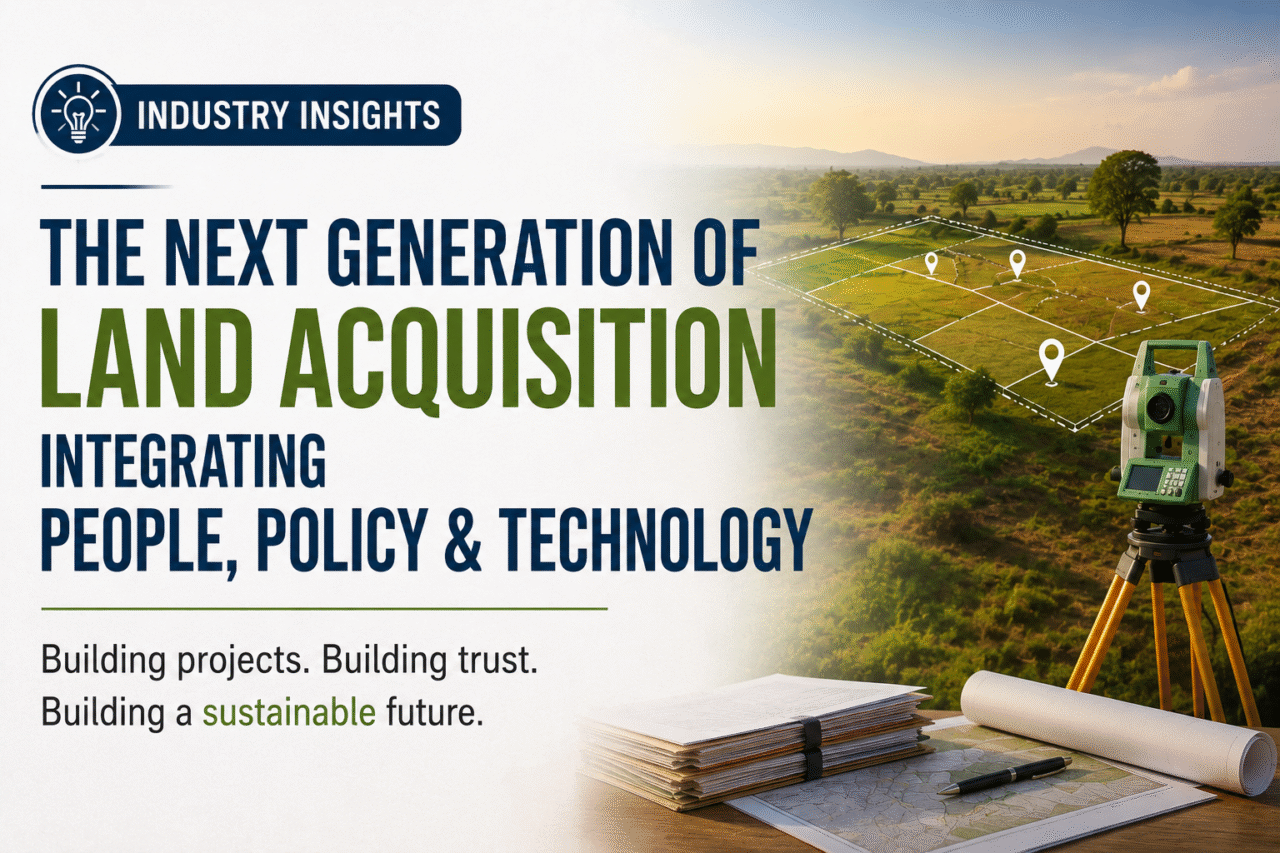
India’s infrastructure growth story is entering a new era. From industrial corridors and renewable energy parks to mining, highways, railways, ports, urban expansion, and manufacturing hubs, development is accelerating at an unprecedented pace.
While engineering excellence often takes center stage, the true success of any infrastructure project begins much earlier with land acquisition, stakeholder engagement, and Rehabilitation & Resettlement (R&R).
Today, these functions are no longer viewed as administrative formalities. They have become strategic disciplines that directly influence project timelines, investment confidence, and long-term sustainability.
The Industry Has Changed
The expectations from land acquisition professionals have evolved significantly over the past decade. Organizations are no longer looking for agencies that simply facilitate land acquisition. They seek partners capable of managing the entire project lifecycle from feasibility studies and land identification to statutory approvals, stakeholder engagement, compensation management, R&R implementation, and project monitoring.
This integrated approach minimizes delays while creating greater certainty for investors and project developers.
Data is the New Foundation
Modern infrastructure projects generate enormous volumes of spatial, legal, environmental, and social data. Harnessing this information through technology enables better decision-making.
The industry is rapidly adopting:
-
GIS-based land intelligence
-
DGPS and drone surveys
-
Digital cadastral mapping
-
AI-assisted project monitoring
-
Land Acquisition Management Systems (LAMS)
-
Real-time progress dashboards
-
Digital documentation and workflow automation
These tools improve accuracy, reduce manual effort, strengthen transparency, and help project teams identify risks before they affect execution.
R&R: From Compliance to Community Development
Rehabilitation & Resettlement has evolved beyond statutory compliance. The most successful projects view affected families as stakeholders in development rather than beneficiaries of compensation.
An effective R&R strategy focuses on:
-
Fair and timely compensation
-
Sustainable livelihood restoration
-
Skill development and employment opportunities
-
Access to quality housing and infrastructure
-
Education and healthcare support
-
Community participation throughout implementation
When communities experience tangible improvements in their quality of life, projects earn long-term social acceptance and reduce implementation risks.
Stakeholder Engagement Creates Project Certainty
Infrastructure projects involve multiple stakeholders: government departments, landowners, local communities, financial institutions, regulatory authorities, and project developers.
Transparent communication, early consultation, effective grievance redressal, and continuous engagement foster trust, reduce disputes, and improve project outcomes. In today’s environment, stakeholder management is not a supporting function; it is a core project management capability.
Sustainability Begins Before Construction
Environmental and social considerations are now integral to project planning.
Responsible land acquisition involves balancing economic growth with ecological conservation, cultural heritage, and community well-being. Projects that integrate sustainability from the planning stage are better equipped to meet regulatory requirements, attract investment, and maintain public confidence.
The Future of the Industry
The future belongs to organizations that combine:
-
Strong legal and policy expertise
-
Advanced digital technologies
-
Accurate field intelligence
-
Community-centric engagement
-
Sustainable Rehabilitation & Resettlement practices
-
Transparent governance and ethical execution
This integrated model not only accelerates project delivery but also builds resilient relationships between industry, government, and communities.
The BNB Perspective
At BNB Land Consultancy, we see land acquisition as more than securing land; it is about enabling responsible development.
By integrating legal expertise, digital surveys, GIS mapping, stakeholder engagement, regulatory support, R&R implementation, and technology driven project management, we help clients navigate complex land acquisition challenges with confidence and efficiency.
As India advances toward becoming a global infrastructure and manufacturing leader, the future of project execution will depend on one simple principle:
The most successful projects are not those that acquire land the fastest; they are the ones that create value for every stakeholder involved. When policy, technology, and people move together, development becomes truly sustainable.